> For the complete documentation index, see [llms.txt](https://docs.arcwise.app/llms.txt). Markdown versions of documentation pages are available by appending `.md` to page URLs; this page is available as [Markdown](https://docs.arcwise.app/espanol/configuracion-de-arcwise/conexion-de-herramientas-de-datos/conectate-a-dbt.md).
# Conéctate a dbt
Once you’ve set up the initial data warehouse connection, you can add dbt jobs linked to the warehouse account.
{% hint style="info" %}
**NOTE:** this requires `Job Viewer` role access to a dbt Cloud account.
{% endhint %}
## Adding DBT
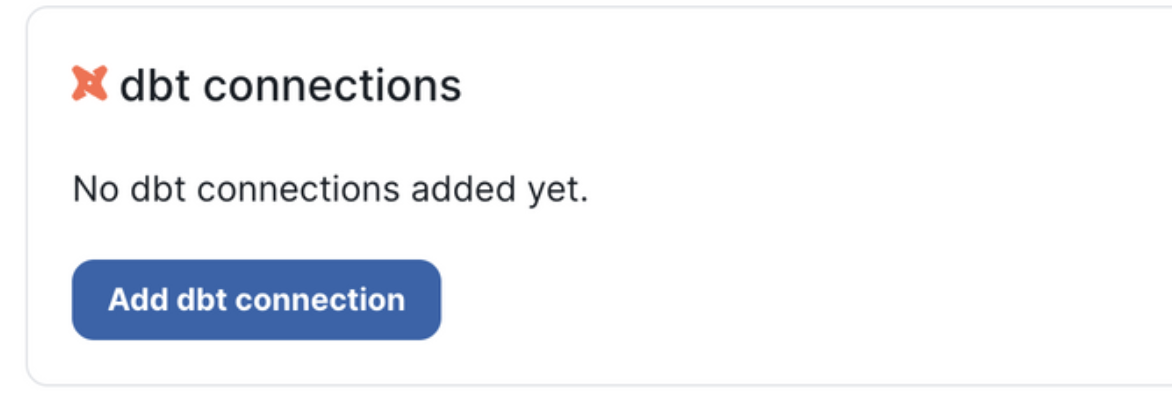
1. In the **Connections** tab, click on the connection that should have linked dbt jobs.
2. Go to the **dbt connections** section and click the **Add dbt connection** button.
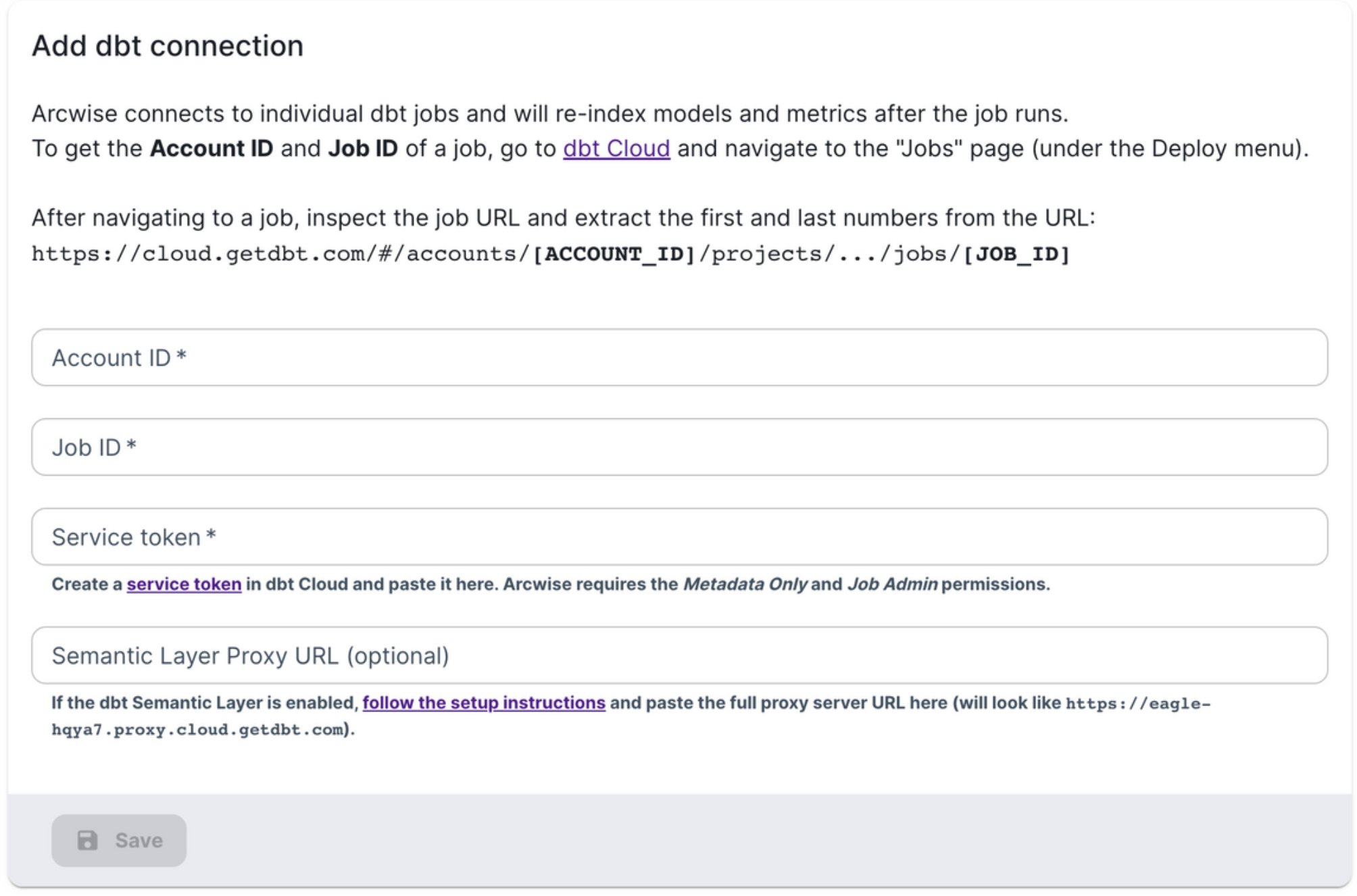
3. Fill in the form with the required details. See below for additional details.
## Form Details
Account and job ID
In dbt Cloud, navigate to the **Jobs** list under the **Deploy** menu. Click on the job that you want to connect to Arcwise (if you have multiple jobs, please select the job that builds your dbt docs, i.e. it includes a dbt docs generate step). The URL should be in the form
`https://cloud.getdbt.com/next/deploy/[ACCOUNT-ID]/projects/[PROJECT_ID]/jobs/[JOB_ID]`
Copy and paste the account and job numbers into the Arcwise form.

Service token
See instructions in [dbt docs for generating a service token](https://docs.getdbt.com/docs/dbt-cloud-apis/service-tokens). The token must have access to both the **Metadata API** and **Job Admin**.
Semantic Layer Proxy URL
If you want to allow Arcwise to use [dbt metrics](https://docs.getdbt.com/docs/build/metrics), then you’ll need to link Arcwise to the dbt Semantic Layer. Follow the [semantic layer setup instructions from the dbt docs](https://docs.getdbt.com/docs/use-dbt-semantic-layer/setup-dbt-semantic-layer) (if you haven’t already) and paste the proxy URL from your job’s environment into Arcwise.
## Indexing
After the dbt connection has been successfully saved, navigate to the “Tables” tab and you should see the models and metrics belonging to your dbt job.
{% hint style="info" %}
By default, Arcwise will index all models and metrics linked to the job that have not been marked as hidden from dbt docs. To hide things from Arcwise, you can set the `docs` config to `show: false` - please see the [official dbt docs](https://docs.getdbt.com/reference/resource-configs/docs#mark-a-model-as-hidden) for how to do this for an individual model or entire folders.
{% endhint %}